
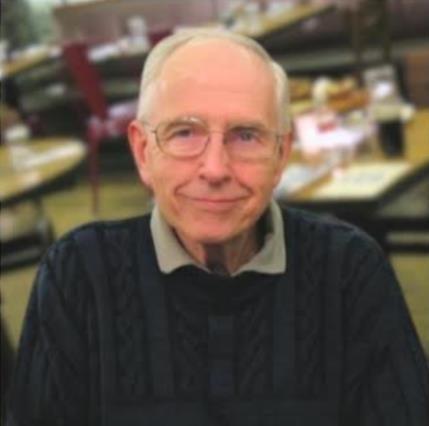
It was in 1981 when Chris, as we all affectionately called him, first came to India, soon after completing the iconic 408-MHz continuum survey, while Chris was a postdoctoral fellow at the Max-Planck-Institut für Radioastronomie (MPIfR) in Bonn from 1977 to 1980, and then spending a year at the Very Large Array (VLA) of the National Radio Astronomy Observatory (NRAO) at Socorro, New Mexico. In fact, the atlas of contour maps of this iconic survey led by Glyn Haslam (Haslam et al. 1982) carries Chris’s affiliation as the Tata Institute of Fundamental Research (TIFR) Centre in the Indian Institute of Science (IISc) Campus, Bengaluru (then known as Bangalore) where he had joined. His coming to India was due to a fortuitous set of circumstances as Govind Swarup, the father of radio astronomy in India, was on sabbatical visiting NRAO, Socorro and collaborating with Ramesh Sinha, who was then working at Socorro while Chris was also working there. Chris turned down a permanent job offer from NRAO to take up Govind’s invitation to join the radio astronomy group of TIFR for a year, which was later extended for another year.
The presence of a part of the radio astronomy group in the TIFR Centre in Bengaluru was due to Govind’s vision of fostering greater interaction and collaboration of our group with the larger astronomy and engineering community in Bengaluru. While some of us shifted to Bengaluru, other colleagues remained at the Radio Astronomy Centre in Ooty. Half of the building at Bengaluru was occupied by us and the other half by the applied mathematics group of TIFR. Led by Vijay Kapahi, who had returned from his postdoctoral/sabbatical position at the Netherlands Foundation for Radio Astronomy, Dwingeloo, ours was not only an academically very vibrant group but an absolutely fun place to be in, and Chris was at the centre of it all while he was here. Both Chris and Vijay were great story tellers, very kind and humane individuals, always ready to try something different both academically and socially, which set the tone and made the place a joy to be in. Chris made close friends not only within the radio astronomy group, but also with the applied mathematics group and in IISc. I recall his account of him going to immerse the idol of Lord Ganesha in Sankey Tank close to the IISc campus with Rauf Ali, grand nephew of the legendary ornithologist Salim Ali, and Vivek Borkar, a renowned mathematician who was then with the applied mathematics group and later superannuated from the Department of Electrical Engineering, IIT Bombay. Rauf, who was one of the path breakers of conservation and ecological sciences in India was then working at IISc. Chris treated everyone equally greeting all, from the security guards and canteen workers to the senior academic and administrative staff. He did not shy away of trying to eat out and savour the local food at all kinds of places. On one occasion, in one of the somewhat run-down restaurants in Yashwantpur, near IISc, the manager/owner who appeared concerned intervened to advise us to take foreigners to a better place. However, he had to be politely told that Chris was the one who brought us here!
Bengaluru traffic in the 1980s was not bad at all, and we often travelled not only to our neighbouring Raman Research Institute but also to the Indian Institute of Astrophysics, in Koramangala in what was then the other end of the city, for colloquia, seminars, journal clubs etc. Chris developed friendships and collaborations with astronomers in both these institutes then headed by V. Radhakrishnan and M.K.Vainu Bappu (and J. C. Bhattacharyya after Vainu Bappu’s demise in 1982) respectively. As examples, these interactions led to determining improved parameters of 40 pulsars known at that time using the Ooty Radio Telescope (Vivekanand, Mohanty and Salter 1983) and an invitation to write a review on the North Polar Spur for the Bulletin of the Astronomical Society of India by the then Associate Editor, Rajesh Kochhar (Salter 1983). It was an extensive and thorough review and although it received a healthy number of citations, it would have been far more noticed if there was an internet and arXiv in those days. He also contributed to the Journal of Astrophysics and Astronomy (e.g. Mantovani et al. 1982), became a life member of the Astronomical Society of India (L0667) and mentored and published with young students (e.g. Vivekanand et al. 1983; Lalitha et al. 1984; Salter et al. 1986). Chris would meticulously critically read and edit many of the papers we wrote during that period even when he was not an author. His “naïve questions of a Galactic astronomer” as he put it, would often make us look at our papers more critically and rethink our arguments. He was keen to learn an Indian language. When he tried to take a straw poll of which language he should learn, he was politely advised that he should learn to speak English with an Indian accent! Of course, there was no uniform Indian accent!
It would probably be fair to say that it was during this period that Chris was also making a transition from being a Galactic radio astronomer to being an extragalactic one as well. His PhD thesis at the Jodrell Bank Observatory of the University of Manchester was titled “Continuum studies of the Galactic radio emission”. He worked under the supervision of Glyn Haslam, whom he referred to as his guru, although his official supervisor was Sir Francis Graham Smith. I was told that in the early days of radio astronomy when data was recorded on punched paper tapes, Glyn could read them. I didn’t manage to directly verify this with Glyn. After completing his PhD in 1970, he went to work with the radio astronomy group in Bologna on a Royal Society postdoctoral fellowship where there was a new radio telescope operating at 408 MHz. Here he worked largely on pulsars, where in these early days they found five new pulsars with the east-west arm of the Bologna Cross telescope (BonsignoriFacondi, Salter & Sutton 1973), supernova remnants (e.g. Colla et al. 1971a,b) and a 408-MHz fan-beam survey at low Galactic latitudes (Felli & Salter 1973; Fanti et al. 1974). Always eager to learn new languages, he became fluent in Italian and I am told also taught in Italian. Unfortunately, his stay in Italy was cut short by his mother’s passing away, and he returned home to look after his father in their home in Hemel Hempstead in the north of London. During this period he took up a job as a town and country planner in Hemel Hempstead which he said he enjoyed immensely.
Chris was born on the 4th of December 1942 and grew up initially in their home near Harrow and Wealdstone station in war-torn London with bombs dropping all around them. Life was hard and continued to be so even after the war. Once while offering a cabbage dish at home in Bengaluru, he mentioned that food was often just boiled cabbages during and after the war, and it was only after coming to India he realized that cabbage could be cooked in different delicious ways. He said that he developed a keen interest in astronomy from a very early age. In addition to astronomy, Watford Football Club (WFC) was only about 10 km away and he developed a life-long interest and association with WFC always following its ups and downs, never missing a game. He was so attached to the club, that “wfc” became an integral part of his gmail address as well. He studied in the local state school, and completed his school education there. When he was about 15 years old, his parents moved to Hemel Hempstead about 25 km north of Harrow and Wealdstone, but Chris continued going to his earlier school. He then went on to study Physics at Manchester University. The iconic 76-metre Lovell telescope conceived and built by Sir Bernard Lovell and his team, then known as a the Mk1A (see Morison 2007 for a brief historical account) was beginning to make exciting discoveries in the field of the then relatively recently discovered quasars and pulsars. It was during this exciting period that Chris joined the Jodrell Bank Observatory to work for his PhD under the supervision of Glyn Haslam.
After being away from astronomy while looking after his father and being a town and country planner in Hemel Hempstead for about five years, his father too passed away. At this stage he fortuitously ran into his PhD supervisor Glyn Haslam, who had meanwhile shifted to the MPIfR and had an available postdoctoral position. Chris was at MPIfR from 1977 to 1980, where the 408-MHz all sky survey was completed (Haslam et al. 1981, 1982), and he worked on Galactic objects especially on radio observations of supernova remnants with the Effelsberg 100-metre radio telescope (e.g. Downes, Pauls & Salter 1980; Haslam, Pauls & Salter 1980). As mentioned earlier, after three years at MPIfR, Bonn and a year at the VLA, NRAO, Socorro, he made his first trip to India in 1981.
After having worked earlier at both metre and cm wavelengths, Chris decided to foray into radio astronomy at mm wavelengths after his time in India and took up a position at Tucson, Arizona which had the NRAO’s 12-metre radio telescope. The telescope located at Kitt Peak, at an elevation of about 1900 m, was decommissioned by NRAO in 2000 and handed over to the University of Arizona. Chris lived in Tucson and travelled to Kitt Peak, which is about 90 km south west of Tucson, on most days. After a couple of years in Tucson (1983 – 1985), he moved to Granada in southern Spain which was the operating head quarters of the then recently started Institut de Radioastronomie Millimétrique (IRAM) 30-metre mm-wave radio telescope. The telescope is located in Pico Veleta at a height of 2850 m in the Sierra Nevada range of Spain. He largely made continuum observations at mm wavelengths of both Galactic and extragalactic sources (e.g. Steppe et al. 1988; Salter et al. 1989a,b; Steppe et al. 1995), including the Galactic centre (Salter et al. 1988; Mezger et al. 1989), which were important for probing dust, examining spectra of steep-spectrum extragalactic sources to determine their spectral ages and variability of the flat-spectrum ones. During this period, he travelled to India to attend the General Assembly of the International Astronomical Union in New Delhi in November 1985, and travelled all the way from New Delhi to Bengaluru by train. He was fascinated by the steam trains he saw during his first visit, but these were soon phased away.
The “peripatetic astronomer” as he called himself took some time off after his stint at IRAM to be at the Jodrell Bank Observatory where I had already joined as a postdoctoral fellow in February 1986. Although we worked together on a number of common astronomical projects, our main focus was on finishing the review on polarization properties of extragalactic radio sources for the Annual Review of Astronomy and Astrophysics (Saikia & Salter 1988). He stayed at our home in Macclesfield for a significant portion of the time, often reading small stories to our then little daughter Nandita after a day’s work. Meanwhile, Govind Swarup who was thinking of building a much bigger radio telescope than the one he and the group had built in Ooty, invited him for a second time to India. Govind’s vision led to the construction of the Giant Metrewave Radio Telescope (GMRT), about 80 km north of Pune, which continues to be one of the most sensitive radio telescopes at low radio frequencies and widely used by the international community (cf. Swarup et al. 1991; Gupta et al. 2017). And during this period, Chris worked on early designs of the GMRT, taught the radio astronomy techniques course at the Joint Astronomy Programme in Bengaluru, and spent time at both Bengaluru, Ooty and Pune. The group started shifting to Pune in stages for construction of the GMRT. I returned to Pune from Jodrell Bank in May 1989, and we overlapped during the latter part of his second stint in India. We had discussed the possibility of organizing a completely hands-on radio astronomy school using the Ooty Radio Telescope. This took place in May 1990 (Saikia et al. 1991). Chris was at the heart of it, meticulously planning each experiment, mentoring and interacting with the students.
Chris had moved to Ooty in early 1989 and integrated extremely well with the group there and became close friends with many. Tapasi Ghosh was among them where she was working on her thesis on low-frequency variability of compact extragalactic radio sources using the Ooty Synthesis Radio Telescope (OSRT). It was when Chris was about to leave India in the summer of 1990 and Tapasi came to bid him good bye, that he proposed to her. Chris went on to work at Green Bank, NRAO in West Virginia after his second long stint in India, while Tapasi went on a postdoctoral fellowship to Dwingeloo in the Netherlands later in the year. It took a little while for them to decide to spend their lives together, and they got married on the 18th of November 1991 at Tucson. They were both offered positions at the Arecibo Observatory which they took up in 1992. They were blessed with a baby daughter, Pia, in 1994 and spent their time at Arecibo since then, except for a four-year period, 2018 – 2022 when they were at the Green Bank Observatory, West Virginia. Marriage and the birth of a daughter finally pinned down the peripatetic astronomer to Arecibo! The marriage of their daughter in 2023, and birth of a grandchild in 2025 brought immense joy to both Tapasi and Chris. Chris was Head of the Radio Astronomy Group at Arecibo from 1992 to 2004, when he stepped down voluntarily to concentrate on scientific research. He was also a Professor of the Astronomy Dept., Cornell University between 1996 and 2006, and a Senior Research Associate at Arecibo Observatory, and an Emeritus Professor of Cornell after that. Tapasi was a staff scientist and friend of Very Long Baseline Interferometry at the Arecibo Observatory (see https://womeninastronomy.blogspot.com/2021/05/women-of-arecibo-dr-tapasighosh.html for a brief account of her work at Arecibo). Having devoted a major portion of their working lives to the Arecibo Observatory, both Chris and Tapasi’s hearts were in ways and means of reviving the Observatory including the 12-metre telescope after the tragic collapse of the 305-metre Arecibo Telescope on December 1, 2020, and the subsequent shut down by the National Science Foundation (cf. Anish Roshi et al. 2021). Arecibo has made outstanding contributions to astronomy over its 57-year history, including the discovery of the first binary pulsar PSR B1913+16 (Hulse & Taylor 1975) which was shown to gradually lose energy due to gravitational radiation as predicted by Einstein’s General Theory of Relativity.
This led to the 1993 Nobel Prize for Physics being awarded to Hulse and Taylor. Arecibo’s astronomical contributions have been nicely summarized in a recent article in Reviews of Modern Physics titled “Colloquium: Radio astronomy with the Arecibo 305-m telescope: In contemporaneous context” by Tapasi and Chris (Ghosh & Salter 2026).
Chris has mentored innumerable researchers, both young and not so young, in the observatories he has been across the world in his own quiet, inimitable way. Michael (Mike) Garrett, who was a student when we all overlapped at Jodrell Bank in the mid 1980s, and was later the inaugural Sir Bernard Lovell chair of Astrophysics at the University of Manchester and the Director of the Jodrell Bank Centre for Astrophysics, said “Chris was a real gentleman, a fine example to all who had the privilege to meet him. He was a Jodrell Bank legend and supported many students there over multiple generations.” Chris moved around the world with very few possessions. Mike also commented “Chris understood more than most that what matters most in life has little to do with material wealth”. Steve Torchinsky from the Observatoire de Paris, France, who was a Senior Research Associate at Arecibo Observatory from 2003 – 2006 wrote “He was a very important influence on me, and my whole career. When I think about all I learned from him, it's hard to believe I was in Arecibo for less than three years! I don't think I've met anyone else who was so careful to do a measurement correctly, and yet so patient with people who were learning, including the relatively older "young" people, like me at the time. …. Chris had a gentle brilliance which I think was too underrated because he was always so quick to give credit to others. He had a massive influence on many students, postdocs, and researchers over the years, and was certainly a key figure in the success of Arecibo over so many decades of operation”. These are just two examples. I have seen his interactions with students first hand in India and at Jodrell Bank, always ready to lend a helping hand not only academically but in any way possible. On one occasion during his first visit to India when a student was having difficulty getting funding to go abroad for observations critical for his thesis due to foreign exchange limitations in India at that time, Chris offered to help from his own savings. On a personal note, during my first trip abroad which was to the VLA at Socorro for observations for my own thesis in 1982, it was due to Chris that his “perhaps cousin” and friend Gareth Hunt, who was working at NRAO, and his partner Claire very generously hosted me at their home and looked after me during this visit. Again in 1986, when I came to England along with my then wife and little daughter to take up a postdoctoral position at Jodrell Bank in a bitterly cold winter month, it was because of Chris that his long-time school friend David (Dave) Rossi came with a copy of The Guardian to receive us at Heathrow, hosted us to get us a bit accustomed to the UK and the weather before heading off to Manchester. Dave Rossi was another remarkable and extremely kind individual, just like Chris, and over the last several years, post covid, the three of us used to chat online every Sunday evening for about an hour. When I last went to England in 2025, Dave made a round trip of about 550 km to receive me at Heathrow Airport from his home in Lincolnshire, again with a copy of The Guardian, drop me at Coventry where my wife was, and then go home to Lincolnshire. Chris and his friends, like Dave, came from a generation where extreme kindness and liberal and progressive thinking seemed just like the natural thing to do. Dave passed away in December 2025, which affected Chris and those of us who knew Dave, but nevertheless just the two of us kept our Sunday chats alive till Chris too fell ill and then sadly passed away. When Dave passed away, Chris said that the world has been a better place for having Dave in it. I am sure the same can be said of Chris. And he will live in the hearts of those who have had the privilege of meeting and knowing him.
References
Anish Roshi, D.; Aponte, N.; Araya, E.; Arce, H.; et al. 2021. arXiv:2103.01367.
Bonsignori-Facondi, S. R.; Salter, C. J.; Sutton, J. M.; 1973. A&A, 27, 67.
Colla, G.; Fanti, C.; Fanti, R.; Ficarra, A.; et al. 1971a. AJ, 76, 953.
Colla, G.; Fanti, C.; Fanti, R.; Ficarra, A.; et al. 1971b. AJ, 76, 956.
Downes, A. J. B.; Pauls, T.; Salter, C. J.; 1980. A&A, 92, 47.
Fanti, C.; Felli, M.; Ficarra, A.; Salter, C. J.; et al. 1974. A&AS, 16, 43.
Felli, M.; Salter, C. J.; 1973. A&A, 29, 129.
Ghosh, T.; Salter, C. J.; 2026. RvMP, 98, 1004.
Gupta, Y.; Ajithkumar, B.; Kale, H. S.; Nayak, S.; et al. 2017. Current Sc., 113, 707.
Haslam, C. G. T.; Pauls, T.; Salter, C. J.; 1980. A&A, 92, 57.
Haslam, C. G. T.; Klein, U.; Salter, C. J.; Stoffel, H.; et al. 1981. A&A, 100, 209.
Haslam, C. G. T.; Salter, C. J.; Stoffel, H.; Wilson, W. E.; 1982. A&AS, 47, 1.
Hulse, R. A.; Taylor, J. H.; 1975. ApJL, 195, 51.
Lalitha, P.; Mantovani, F.; Salter, C. J.; Tomasi, P.; 1984. A&A, 131, 196.
Mantovani, F.; Nanni, M.; Tomasi, P.; Salter, C. J.; 1982. JApA, 3, 335.
Mezger, P. G.; Zylka, R.; Salter, C. J.; Wink, J. E.; et al. 1989. A&A, 209, 337.
Morison, I.; 2007. Astronomy & Geophysics, 48, 23.
Saikia, D. J.; Salter, C. J.; 1988. ARA&A, 26, 93.
Saikia, D. J.; Salter, C. J.; Banhatti, D. G.; Ghosh, T.; et al. 1991. BASI, 19, 109.
Salter, C.J.; 1983. BASI, 11, 1.
Salter, C. J.; Patnaik, A. R.; Shaver, P. A.; Hunt, G. C.; 1986. A&A, 162, 217.
Salter, C. J.; Sinha, R. P.; Stobie, E. B.; Kerr, F. J.; et al. 1988. MNRAS, 232, 407.
Salter, C. J.; Reynolds, S. P.; Hogg, D. E.; Payne, J. M.; et al. 1989a. ApJ, 338, 171.
Salter, C. J.; Chini, R.; Haslam, C. G. T.; Junor, W.; et al. 1989b. A&A, 220, 42.
Steppe, H.; Salter, C. J.; Chini, R.; Kreysa, E.; et al. 1988. A&AS, 75, 317.
Steppe, H.; Jeyakumar, S.; Saikia, D. J.; Salter, C. J.; 1995. A&AS, 113, 409.
Swarup, G.; Ananthakrishnan, S.; Kapahi, V. K.; Rao, A. P.; et al. 1991. Current Sc., 60, 95.
Vivekanand, M.; Mohanty, D. K.; Salter, C. J.; 1983. MNRAS, 204, 81P.
----------------------------
A tribute by Prof. D. J. Saikia